Published by Yorkshire Damp & Mould
Rising damp and penetrating damp are the two forms of structural damp that most often affect Yorkshire homes. Both leave walls wet, stained and prone to mould, and to the untrained eye they can look alike. But the water arrives by a different route in each case, so the cure is different too. Mixing them up is one of the most common reasons damp treatments fail.
How rising damp works
Brick, stone and mortar are porous. Where a wall sits on damp ground, water is drawn upwards through tiny pores in the masonry, a process called capillary action. Most houses built in the last century or so have a damp proof course, a barrier near the base of the walls, to stop this. Older homes may never have had one, and an existing course can break down or be bypassed.
Because gravity limits how far water can climb, rising damp is confined to the lower part of ground-floor walls. As the water evaporates it leaves salts in the plaster, which attract more moisture from the air and keep the problem visible even in dry weather.
Signs of rising damp
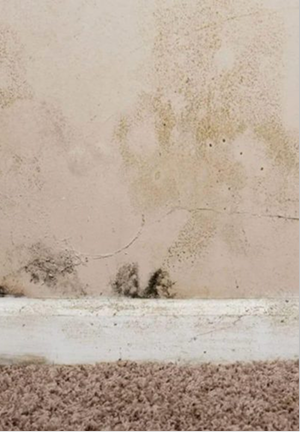
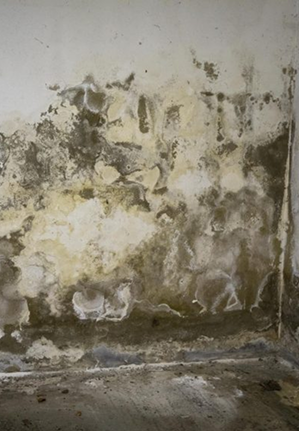
• A horizontal band of damp or staining along the base of walls, often with a wavy upper edge.
• White, crystalline salts on the plaster surface.
• Skirting boards and floor timbers that are soft, discoloured or rotten.
• Damp that is present all year rather than mainly after rain.
How penetrating damp works
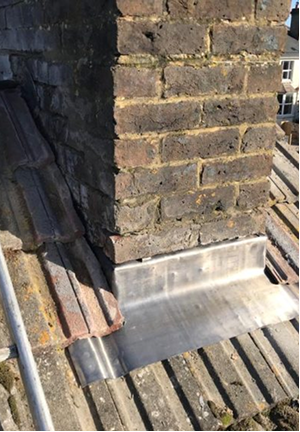
Penetrating damp is water that comes in from outside, usually driven by rain and wind. It can appear at any height, wherever the building's outer skin has a weakness. Typical routes are eroded pointing, cracked or hollow render, porous or spalled brick and stone, overflowing or leaking gutters and downpipes, failed lead flashing around chimneys, slipped roof slates, and gaps around window and door frames. Where soil is piled against a wall or the house is built into a slope, water can also push sideways through below-ground masonry, which is a frequent problem in cellars.
Signs of penetrating damp
• Patches that appear or grow after spells of heavy or wind-driven rain.
• Damp at upper levels, on chimney breasts, or around windows.
• Rings or tide lines with defined edges that move with the weather.
• Visible defects on the outside of the wall at roughly the same spot.
Treating rising damp
The first step is to check for bridging. Raised flower beds, patios, paths, render or internal plaster running past the damp proof course can all give water a way round it, and removing them may be the whole answer. Where the course is missing or has failed, we install a chemical damp proof course using the Dry Rod System™. Salt-contaminated plaster is then removed and the wall replastered and redecorated once it has had time to dry.
Treating penetrating damp
Here the priority is the outside of the building. Repointing, render repairs, clearing and repairing gutters and downpipes, and fixing flashing or seals stop the water at its source. External masonry weather proofing can add protection on exposed walls. Below ground, basement and cellar tanking keeps out water pushing through the walls. Only after the source is fixed and the wall has dried is it worth repairing the plaster inside.
Getting the diagnosis right
Because both types can appear on the same wall, and condensation can confuse things further, testing is worth the effort before any work is booked. Our damp proofing work always starts with a survey to confirm which type you have. Call 07518 705555 or use the enquiry form and we will arrange for a surveyor to take a look.
Frequently Asked Questions
How high does rising damp usually reach?
It is generally limited to the lower part of ground-floor walls, because gravity and evaporation stop water climbing much further. Damp patches on upper floors or high on a wall are far more likely to be penetrating damp or condensation.
Can penetrating damp show up on an internal wall?
It can. Water entering through a roof, chimney or party wall can travel some distance before it appears, so a patch is not always directly behind the defect. That is one reason an external inspection is part of any proper survey.
Does rising damp always need a new damp proof course?
No. Sometimes the existing course is fine but has been bridged by raised soil, a patio, render or internal plaster. Removing the bridge can be enough. A chemical damp proof course is used where the original is missing or has failed.
Can I repair penetrating damp myself?
Simple jobs such as clearing a blocked gutter can be done safely from the ground. Anything involving ladders, roofs, chimneys or large areas of pointing or render is best left to someone with the right access equipment and experience.
Related help
If this sounds like your home, our damp proofing service explains how we diagnose and treat it in practice. You may also find Damp or Condensation? How to Tell the Difference and Signs You Need Damp Proofing useful.
Need help with this?
Our team covers Leeds and across Yorkshire. Call 07518 705555 or find out more about our service.
See our damp proofing service